
Hydroponics for Beginners Indoor Growing Made Simple
A pot of basil on a sunny windowsill can be easy. A shelf of lettuce growing indoors all year takes a little more planning. Hydroponics sits somewhere in the middle. It removes soil from the equation, but it does not remove the need to understand how plants grow.
For homeowners interested in herbs, leafy greens, vegetables, and other food crops, hydroponics can be a practical way to grow indoors when outdoor space, weather, or soil quality gets in the way. The key is knowing what the system does, what it does not do, and how light, water, nutrients, airflow, temperature, and humidity work together.
This guide from North Star Victory Gardens explains hydroponics for beginners in plain language, with real examples you can picture in a home setting.
What hydroponics means
Hydroponics is a way of growing plants without soil. Instead of pulling nutrients from compost, garden soil, or potting mix, plants receive nutrients from water.
The word often sounds more technical than the method really is. In a basic hydroponic setup, plant roots sit in or near water that contains dissolved plant food. A growing medium may hold the plant upright, but it does not feed the plant the way soil does.
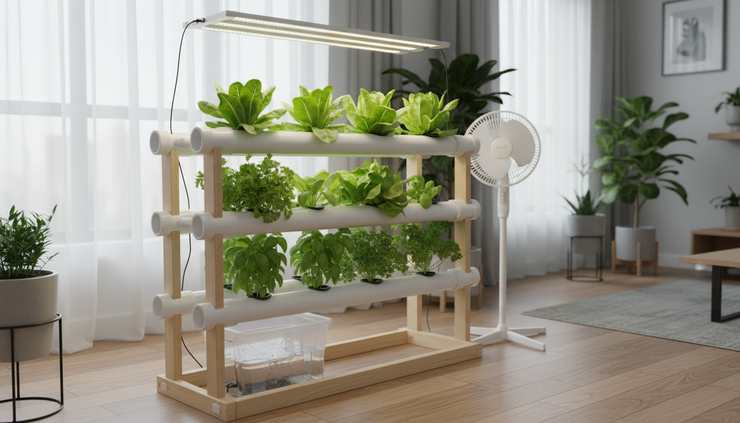
A simple indoor example would be lettuce growing in net cups on a shelf. The roots reach down into a container of nutrient solution. A grow light replaces sunlight. A small pump or air stone may help keep oxygen moving through the water.
Hydroponics is not magic, and it is not automatically better than soil growing. It is simply a different way to deliver water, nutrients, and oxygen to plant roots.
How plants grow without soil
Soil does several jobs in a traditional garden. It anchors roots, holds water, stores nutrients, supports beneficial microbes, and allows air to reach the root zone.
Hydroponic systems replace those jobs with separate parts.
Plants still need the same basics:
Light for photosynthesis
Water for growth and nutrient movement
Nutrients such as nitrogen, phosphorus, potassium, calcium, and magnesium
Oxygen around the roots
Suitable temperature and humidity
Air movement around the leaves
In hydroponics, the roots absorb minerals dissolved in water. The plant does not “eat” soil. It uses nutrients that are available in the root zone. Soil is one natural way to deliver those nutrients, while hydroponics is a managed way to do the same thing.
That managed environment is both the advantage and the responsibility. If the light is weak, plants stretch. If nutrients are too strong, roots can suffer. If water lacks oxygen, growth slows. Hydroponics works best when the entire growing environment is treated as one connected system.
The basic parts of an indoor hydroponic system
Most hydroponic setups use the same building blocks, even if the design looks different.
Water reservoirs
The reservoir is the container that holds the nutrient solution. It may be a small tank under a countertop herb garden or a larger covered tub for lettuce, kale, or tomatoes.
A good reservoir should be:
Food-safe or suitable for gardening use
Easy to clean
Large enough to keep water levels stable
Covered to reduce algae growth
Accessible for testing and refilling
Small systems may use only a few litres of water. Larger year-round vegetable areas may need bigger reservoirs because fruiting crops drink more as they grow.
Nutrient solutions
A nutrient solution is water mixed with hydroponic fertiliser. These nutrients are designed to dissolve fully, so plant roots can absorb them.
Most beginners do best with a complete hydroponic nutrient made for leafy greens, herbs, or general vegetables. Follow the label carefully. More nutrients do not mean faster growth. Too strong a solution can stress plants and cause leaf burn.
Clean water matters too. If tap water is very hard or heavily treated, it may affect nutrient balance. Many home growers can still use tap water, but testing helps avoid guesswork.
Growing media
Growing media hold plants in place and help roots stay moist while still getting air. They are not used as the main food source.
Common options include:
Coconut coir
Clay pebbles
Rockwool cubes
Perlite
Grow plugs made for seed starting
For a beginner growing lettuce or basil, starter plugs and net cups are often the simplest option. The seed starts in the plug, then the plug sits in a cup above the water.

Pumps and irrigation
Some systems move water with pumps. Others do not.
A water pump may circulate nutrient solution through tubes or channels. An air pump may push air through an air stone, creating bubbles that add oxygen to the reservoir.
Oxygen is easy to overlook. Roots need it to function well. In still water, especially warm water, oxygen can drop. That is why many active systems use bubbling or flowing water.
Grow lights
Indoor food crops usually need more light than a window provides. A bright window may support a few herbs, but leafy greens, vegetables, and seedlings grow more reliably under full-spectrum LED grow lights.
Light affects:
Plant size
Leaf colour
Stem strength
Flavour and texture
Time to harvest
Lettuce and herbs often do well with moderate light. Fruiting vegetables such as tomatoes and peppers need stronger light and more space.
Air circulation
Air movement helps plants exchange gases, strengthens stems, and reduces damp pockets around leaves. A small fan can make a big difference indoors.
Good airflow does not mean blasting plants with wind. Gentle movement is enough. Leaves should move slightly, not flap constantly.
pH and nutrient monitoring
Two common terms in hydroponics are pH and EC.
pH measures how acidic or alkaline the water is. If pH moves too far out of range, plants may struggle to absorb nutrients even when nutrients are present.
EC stands for electrical conductivity. It gives a general reading of how much dissolved nutrient is in the water. Some meters show ppm instead, which is another way to estimate nutrient strength.
Beginners do not need to become lab technicians. A basic pH meter or test drops, plus careful nutrient mixing, can prevent many problems.
Passive and active hydroponic systems
Hydroponic systems fall into two broad groups.
Passive systems use no electric pump to move water. They rely on wicks, standing solution, or capillary action to bring moisture to roots. They are quiet and simple, which makes them good for herbs and small greens.
Active systems use pumps, timers, air stones, or moving water. They can support faster growth and larger setups, but they bring more parts to check.
Here is a simple comparison:
Passive hydroponics | Active hydroponics |
Fewer moving parts | Better water movement |
Lower setup complexity | More control over oxygen and irrigation |
Good for herbs and small greens | Useful for larger or hungrier crops |
Less to maintain | More equipment to monitor |
A countertop herb kit may be passive or lightly active. A larger indoor vegetable rack with lettuce channels, a reservoir, and pump is usually active.
Common types of hydroponic systems
Different systems suit different crops, budgets, and experience levels.
Wick systems
A wick system draws nutrient solution from a reservoir into the growing medium. It is one of the simplest styles, but it may not provide enough water for large or thirsty crops.
Best for:
Basil
Mint
Parsley
Small leafy greens
Deep water culture
In deep water culture, plant roots hang into nutrient solution. An air pump and air stone usually add oxygen.
This is popular for lettuce because the design is simple and growth can be steady when light and nutrients are managed well.
Best for:
Lettuce
Bok choy
Basil
Spinach varieties suited to indoor conditions
Nutrient film technique
Nutrient film technique, often called NFT, sends a thin stream of nutrient solution through channels. Roots sit in the channel and absorb water and nutrients as the solution flows past.
This system is common for leafy greens and herbs, but it needs reliable pump operation and proper channel slope.
Best for:
Lettuce
Arugula
Basil
Coriander
Ebb and flow systems
An ebb and flow system floods a grow tray with nutrient solution, then drains it back into the reservoir. A timer controls the cycle.
This can work for many crops, but beginners should learn the timing and drainage carefully.
Best for:
Herbs
Leafy greens
Some compact vegetables
Drip systems
A drip system sends nutrient solution through small lines to each plant. It is often used for larger crops because each plant can receive steady watering.
Best for:
Tomatoes
Peppers
Cucumbers
Larger herbs
These crops need stronger light, more pruning, and better support than lettuce or basil.

What beginners can grow first
The easiest hydroponic crops are usually fast-growing, compact, and leafy.
Good beginner choices include:
Lettuce
Basil
Parsley
Mint
Bok choy
Arugula
Coriander
Swiss chard
Kale grown young
Spring onions
Lettuce is a strong first crop because it grows quickly, stays compact, and shows problems clearly. Basil is another good choice because it responds well to indoor growing and regular harvesting.
Fruiting vegetables are more demanding. Tomatoes, peppers, cucumbers, and strawberries can grow hydroponically, but they need more light, more nutrients, stronger support, and closer monitoring. They are better as a second step after a few successful rounds of greens and herbs.
How much space hydroponics needs
Hydroponics can fit many homes because the setup can scale up or down.
A small herb garden may fit on a kitchen counter or a narrow shelf. A lettuce setup might use one shelf with a grow light above it and a reservoir below. A larger year-round vegetable area may use a rack system in a spare room, enclosed patio, garage corner, or utility area.
Think about space in three ways:
The footprint of the equipment
The height plants need as they grow
The working room needed for cleaning, refilling, and harvest
A shelf that looks roomy on day one can feel crowded once leaves spread. Leave space for airflow and access.
How much maintenance to expect
Hydroponics is not maintenance-free. It shifts the work from weeding and soil care to water and equipment care.
A simple home routine may include:
Checking water level every few days
Topping up the reservoir as plants drink
Checking pH regularly
Replacing or refreshing nutrient solution as needed
Cleaning algae or mineral build-up
Watching leaves for colour, curling, or spotting
Making sure pumps, lights, and fans work properly
Small herb systems may only take a few minutes at a time. Larger active systems need a more consistent routine. The more plants in the system, the more important regular checks become.
Advantages and disadvantages compared with soil growing
Hydroponics has real strengths, but soil growing still makes sense for many homes and crops.
Advantages of hydroponics | Disadvantages of hydroponics |
Can grow food indoors year-round with proper lighting | Needs equipment, electricity, and monitoring |
Uses no garden soil, which helps where soil space is limited | Mistakes in nutrients or pH can affect plants quickly |
Can be clean and compact for shelves or racks | Pumps, lights, and meters add cost and complexity |
Water and nutrients are easier to measure | Power outages or pump failures can cause problems |
Good for leafy greens and herbs in small spaces | Large fruiting crops need strong lights and support |
Soil has buffers. It can hold nutrients, moisture, and microbial life in ways that protect plants from sudden changes. Hydroponics gives more control, but that also means less forgiveness when something is off.
Common beginner mistakes to avoid
Most early problems come from a few simple issues.
Mixing nutrients too strong
Ignoring pH
Using weak lights for food crops
Placing plants too close together
Letting water get too warm
Forgetting airflow
Allowing algae to grow in uncovered reservoirs
Growing difficult crops too soon
Skipping regular cleaning
Assuming hydroponics only means water and nutrients
The last mistake is the biggest. Hydroponics is one part of a complete indoor growing environment. Lighting, airflow, temperature, humidity, water quality, nutrients, and plant spacing all affect performance.

A beginner setup checklist
For a first indoor hydroponic project, start small. A shelf of lettuce and herbs teaches the basics without requiring a full grow room.
Basic equipment includes:
A reservoir with a lid
Net cups or plant holders
Seed starter plugs
Hydroponic nutrients for leafy greens or herbs
pH test drops or a pH meter
pH adjustment solution if needed
Full-spectrum LED grow light
Timer for the light
Air pump and air stone for deep water culture
Small fan for airflow
Seeds for easy crops
Clean water source
Simple notebook or app for tracking changes
A practical first goal might be six to twelve lettuce plants on one shelf, plus a few basil plants. Once that feels easy, expand to more shelves, a larger reservoir, or a different system type.
Frequently asked questions
Is hydroponics hard for beginners?
Hydroponics is manageable if the first setup is simple. Leafy greens and herbs are easier than fruiting vegetables. Start with one system, learn the routine, then expand.
Do hydroponic plants need sunlight?
They need strong light, but it does not have to be sunlight. Indoors, most food crops perform better under proper LED grow lights than in a dim window.
How often should the nutrient solution be changed?
Small systems usually need regular topping up and periodic solution changes. The exact timing depends on plant size, reservoir volume, and nutrient strength. Watch water level, pH, and plant health rather than relying only on the calendar.
Can hydroponics grow real vegetables indoors?
Yes, but crop choice matters. Lettuce, herbs, and leafy greens are the easiest. Tomatoes, peppers, and cucumbers need more light, space, support, and monitoring.
Is hydroponics better than soil gardening?
It is better for some situations and less suitable for others. Hydroponics can be clean, compact, and productive indoors. Soil growing is often simpler outdoors, more forgiving, and better for many large crops.
Start with the system your space can support
Hydroponics works best when the setup matches the space, the crop, and the grower’s routine. A small indoor shelf for lettuce and herbs can be a smart first project. A larger year-round vegetable growing area can come later, once the basics feel familiar.
North Star Victory Gardens encourages homeowners to see hydroponics as one useful tool, not a replacement for every form of gardening. Start with crops that are forgiving, choose equipment you can maintain, and build an indoor growing system that fits your home and experience level.


Comments